
What Quartz Countertops Are Made Of: A Clear Guide for Homeowners
If you’ve been wondering what quartz countertops are made of, the answer is simpler than most people expect. Quartz starts with a natural mineral, but the countertop itself is an engineered surface made from crushed quartz, resin, pigments, and binders.
That mix is what gives quartz countertops their clean, consistent look and much of their day-to-day practicality. It’s also a big reason quartz surfaces are known for durability, low maintenance, and a wide range of colors and patterns.
For homeowners comparing countertop materials, this matters. Quartz isn’t the same as a natural stone slab like granite or marble, and understanding that difference can help you make a better decision for your kitchen or bathroom.
In this guide, we’ll break down what quartz countertop material is made of, how engineered quartz is manufactured, and what that means for how the surface looks, performs, and holds up over time.
Quartz Countertops Combine Natural Quartz With Engineered Materials
Quartz countertops are made from real quartz, but they are not cut from a single natural stone slab the way granite, marble, or quartzite are. Instead, quartz surfaces are made by combining crushed quartz crystals with resin, pigment, and other binding materials. That’s why quartz is often described as engineered stone or man-made stone.
At its core, quartz is a naturally occurring mineral found in nature. It’s one of the most abundant raw materials in the earth, which is why natural quartz plays such a big role in modern countertop materials. When that raw quartz is processed and combined with binders, it becomes a quartz countertop with a more controlled appearance and a more consistent surface than many natural stone options.
The exact mix can vary by manufacturer, but most quartz countertops follow the same basic formula: quartz for strength, resin or polymer to bind it together, and pigment to create the final color and pattern. That combination is what gives engineered quartz its balance of durability, design flexibility, and everyday practicality.
The Natural Part of Quartz
Quartz comes from a real mineral found in nature, not a synthetic substitute. Natural quartz is one of the most common raw materials used in stone surface manufacturing, and it gives quartz countertops much of their hardness and structure.
That matters because it explains why quartz countertops still contain real stone material. Even though quartz is an engineered stone surface, it starts with raw quartz and quartz crystals that form the foundation of the finished slab.
The Engineered Part of Quartz
What makes quartz different from natural stone is the way those materials are combined. Crushed quartz is mixed with resin, polymer, or polyester resins that bind everything together into a solid surface. Pigment is then added to create specific colors and designs, whether that means a soft speckle, a clean white background, or a veined look.
This is what makes quartz an engineered product rather than a cut natural slab. So while quartz starts with a natural mineral, the finished countertop is engineered to deliver a more controlled appearance and more predictable performance.
How Quartz Countertops Are Manufactured Into Slabs
Quartz countertops are manufactured, not cut from a single quarry block like granite or marble. The process starts with crushed quartz, which is blended with resin and pigment to create an engineered surface.
That mixture is then pressed into slabs, cured, and finished. Once the quartz slabs are ready, they can be fabricated into kitchen and bathroom surfaces like countertops, island tops, and vanity tops.
Because quartz countertops are manufactured in a controlled way, they tend to offer more consistency in colors, patterns, and texture from slab to slab.
From Raw Quartz to Quartz Slabs
Making quartz starts with natural quartz that has been processed into a workable raw material. That material is blended with resin and pigment, then compressed into slab form using a controlled manufacturing process.
After that, the slabs are cured and finished based on the intended look. Some quartz surfaces are produced with polished finishes for a smoother, more reflective appearance. Others may be honed for a softer, more muted look.
Why Manufacturing Matters
The way quartz is made affects more than just production. It also affects what homeowners see in the finished product. Because the material is engineered, there is usually more consistency from slab to slab, better control over colors and designs, and a more predictable overall appearance across a full kitchen or bathroom project.
That doesn’t mean every slab looks identical, but it does mean quartz often gives homeowners more control when they want a specific look.
Why Quartz Looks Different From Natural Stone
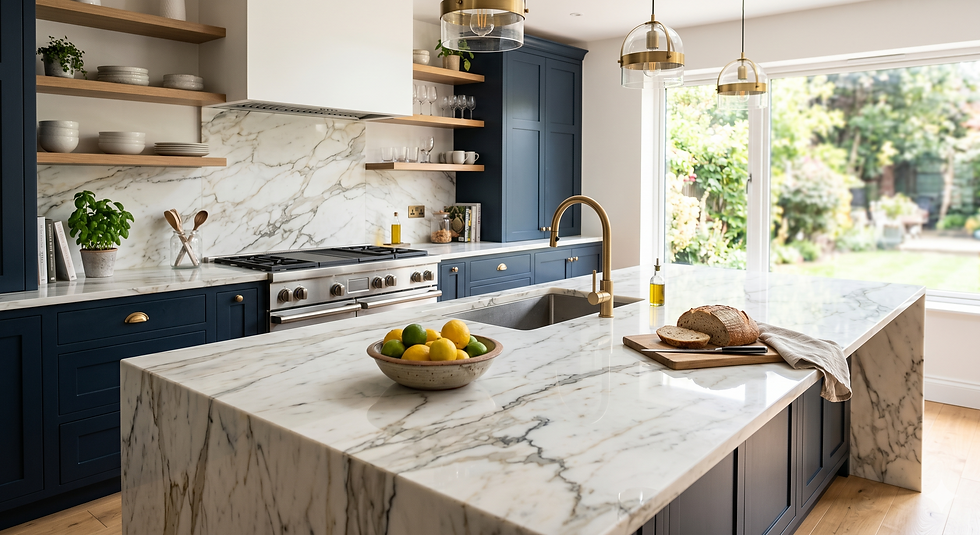
Because quartz is engineered, it offers more control over colors and patterns than many natural stone surfaces. That’s why quartz options range from pure white and soft speckle to bold veining and more uniform, modern looks.
Quartz can also be made to resemble natural stones like marble and granite. Some designs mimic the soft movement of marble, while others are made to echo the depth and variation found in granite. Others don’t try to imitate natural stone at all and instead lean into a cleaner, more consistent look.
That design flexibility is one reason quartz is popular in both kitchen and bathroom projects. It gives homeowners more choice when they want a surface that fits a specific style.
Colors, Patterns, and Texture in Quartz Surfaces
The final look of quartz comes from a few factors working together. Pigments affect color. Material blending influences depth, movement, and texture. The surface finish also changes how the countertop looks and feels, whether that means a polished finish or a softer honed appearance.
Why Consistency Matters in Real Projects
Consistency matters when a project includes a large island, full-height backsplash, or matching vanity tops. Quartz gives homeowners more control when they want the finished look to stay clean, cohesive, and predictable across the space.
How the Composition of Quartz Affects Durability and Maintenance
The way quartz is made has a lot to do with how it performs day to day. Because quartz is bound with resin, it has a non-porous surface that resists absorbing spills. That’s a big reason quartz is known for durability, stain resistance, and low maintenance.
Quartz also doesn’t require sealing, which makes it easier to care for than some porous countertop materials. In busy kitchen and bathroom spaces, that can be a real advantage.
Still, durable doesn’t mean indestructible. Quartz holds up well, but it still needs normal care and routine cleaning.
Because quartz is nonporous, everyday spills are less likely to soak into the surface. That can make quartz easier to live with than more porous materials that may stain more easily over time.
Quartz doesn’t require sealing, but it still needs regular cleaning to look its best. It’s also best to be careful with heat. Quartz is heat-resistant to a point, but hot pans or high heat can still damage the surface.
Quartz vs Quartzite, Granite, and Marble
Quartz is different from granite, marble, and quartzite because it is engineered rather than cut from a natural slab. Quartz countertops are made from natural quartz mixed with resin and pigment, while granite, marble, and quartzite are natural stone materials pulled from the earth.
Quartz and quartzite are often confused because the names sound similar, but they are not the same. Quartz is manufactured for more controlled consistency. Quartzite is a natural stone with more natural variation from slab to slab.
The same basic distinction applies when comparing quartz with granite and marble. Granite countertops and marble surfaces are natural slab materials, while quartz surfaces are designed to offer a more uniform appearance and a nonporous structure. Natural stone can be more porous depending on the material, while quartz is made to be easier to maintain.
The Difference Between Quartz and Quartzite
Quartzite is a natural stone. Quartz is an engineered product made with natural quartz, resin, and pigment. Similar names, different materials.
Quartz Compared With Granite and Marble
Granite and marble are natural stone countertops with their own natural movement and variation. Quartz is manufactured for more consistency and lower maintenance. The best fit usually comes down to the look you want and how much upkeep you’re comfortable with.
Final Thoughts
Quartz countertops are made from natural quartz combined with resin, pigment, and binders. That’s what makes quartz an engineered stone product rather than a fully natural slab like granite, marble, or quartzite.
That composition also helps explain why quartz is popular in so many homes. It offers controlled colors and patterns, low maintenance, and solid day-to-day durability.
For homeowners comparing countertop materials, understanding what quartz countertop surfaces are made of makes it easier to decide whether quartz is the right fit for the project.
Frequently Asked Questions
Are quartz countertops natural stone?
Quartz countertops contain natural quartz, but they are not natural stone slabs like granite or marble. They are engineered stone surfaces made by combining quartz with resin and pigments.
Do quartz countertops need to be sealed?
Usually no. Quartz is nonporous, so it doesn’t require sealing the way some porous stone countertops do.
What is the difference between quartz and quartzite?
Quartz is engineered using natural quartz and binders. Quartzite is a natural stone. The names are similar, but the materials are different.
Are quartz countertops stain-resistant?
Yes, quartz is generally stain-resistant because it has a non-porous surface. That makes it easier to maintain in kitchen and bathroom spaces.
Why do quartz countertops have so many colors and patterns?
Because quartz countertops are manufactured, pigments and design control can create a wide variety of quartz styles, from soft speckle to bold veined looks that mimic natural stone.
Need Help Comparing Quartz Options for Your Space?
If you’re planning a kitchen or bathroom project in Central Connecticut, we can help you compare quartz options, look at slab styles, and choose a surface that fits your space and how you live. Explore our materials, learn more about our fabrication services, or reach out to start the conversation.


Comments