
Is Marble a Good Choice for Kitchen Countertops?
If you’re considering marble for kitchen countertops, you’re probably pulled in two directions. You love the look of marble, but you’ve also heard the warnings about staining, etching, and maintenance.
Marble has been used for centuries and is still one of the most recognized natural stone countertops available. Many homeowners are drawn to white marble countertops for their bright white background, soft veining, and the way they reflect light across a kitchen. It’s a material that feels timeless without trying too hard.
At the same time, marble is more porous than granite or quartz. That means it behaves differently in a busy kitchen. Spills, acids, and daily wear matter more on a marble surface than they would on some other countertop materials.
So, is marble a good choice for kitchen countertops? The right question is whether it is good for your own specific kitchen. Let’s walk through the real pros and cons of marble countertops so you can decide with confidence.
Why Marble Countertops Remain a Popular Choice
Marble countertops are still a popular choice for one simple reason: the look is hard to replicate. Even with modern alternatives on the market, many homeowners come back to marble for kitchen countertops because it feels natural, established, and authentic.
The Natural Variation You Can’t Manufacture
Marble is a natural stone. That means every marble slab has its own movement, veining, and subtle shifts in tone.
No two slabs are identical. Even pieces cut from the same block will vary once installed. For homeowners who don’t want a repeat pattern across their kitchen countertop, that variation is part of the appeal.
This is different from discussing durability or performance. It’s about visual character.
White Marble and Light-Filled Kitchens
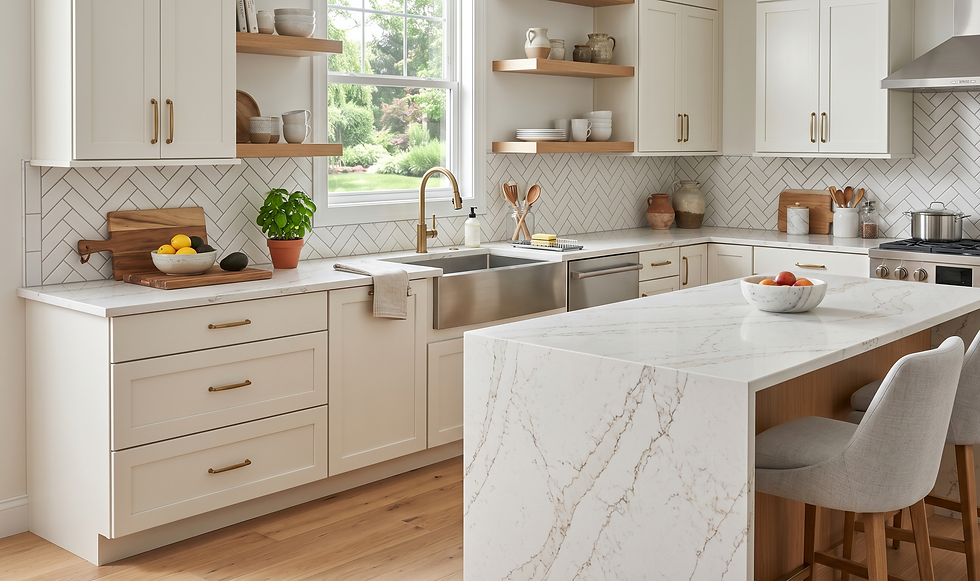
Many marble types feature a bright white background with natural veining running through the surface. White marble countertops reflect light and can make a kitchen feel more open, especially in homes with traditional layouts or smaller windows.
That’s one reason marble is often chosen in:
Historic Colonials
Transitional kitchens
Classic, detail-driven homes
The marble look tends to feel timeless rather than trendy.
Popular Marble Types Homeowners Ask For
When someone says they want marble countertops, they’re usually thinking of a specific style. A few well-known options include:
Carrara marble – softer, more subtle veining
Calacatta marble – bolder movement and higher contrast
Statuario marble – bright white base with dramatic veining
Knowing the marble type helps narrow down the overall look before purchasing a slab of marble.
Why It Has Stuck Around for Generations
Marble has been used for countertops for decades, long before quartz became common in residential kitchens. It’s considered a staple in natural stone countertops because of its visual appeal, not because it’s the most durable option available.
For example, a homeowner restoring a historic Connecticut kitchen may choose marble simply because it fits the architecture. In that setting, granite or quartz might function well, but marble looks right.
The Pros of Marble Countertops in the Kitchen
When homeowners ask about the pros of marble countertops, they’re usually trying to balance beauty with practicality. Marble isn’t perfect, but it does offer specific advantages that keep it in demand.
1. Marble Resists Heat Well
Marble is known for its ability to handle heat better than many engineered surfaces. In a working kitchen, that matters.
You can briefly set a warm pan on a marble countertop without immediate damage. That said, we still recommend using trivets for protection. Marble resists heat, but consistent direct heat isn’t something any natural stone should endure long term.
2. A Timeless, Established Look
Marble has been used for centuries in architecture and interior spaces. It doesn’t feel trendy or tied to a specific decade.
White marble countertops, especially in classic kitchens, tend to age stylistically very well. If you’re planning to stay in your home long term, that consistency in appearance can be a real advantage.
3. Each Marble Slab Is One of One
Because marble is a natural stone, every marble slab has its own veining and movement. No two installations will look exactly the same.
For homeowners who don’t want a repeat pattern across their kitchen countertops, that individuality is part of the appeal.
4. A Surface That Bakers Appreciate
Marble stays relatively cool compared to many other materials. That’s one reason it’s traditionally used for baking.
If you regularly roll dough or work with pastry, a marble surface can be a practical choice. It’s not the only material that works, but marble offers that advantage naturally.
5. It Develops Character Over Time
Some materials are expected to stay flawless. Marble is different.
Over time, marble can develop light etching or subtle patina, especially in active kitchens. Some homeowners actually prefer the look of aged marble. It tells the story of how the kitchen is used rather than trying to stay factory-perfect.
Choosing honed marble instead of a high polish can also soften how wear appears over time.
6. It changes how a kitchen feels visually
Marble countertops typically bring a certain visual weight to a space. In higher-end kitchens, marble is considered a statement material because of its natural movement and brightness.
It’s not about showing off. It’s about how the space feels finished and intentional.
7. Marble Can Last for Decades With Proper Care
Marble can last a long time when it’s properly fabricated, sealed, and maintained. We’ve seen marble countertops in older homes that are still functional after decades of use.
It does require care, but longevity is absolutely possible.
What This Means for You
If you want a kitchen countertop that gains character instead of staying perfectly uniform, marble may be a fit. It offers heat resistance, individuality, and a timeless look. The key is understanding that it behaves like a natural stone, not a manufactured product.
The Cons of Marble Countertops You Should Understand
The cons of marble countertops aren’t deal-breakers for everyone. But they do matter, especially in busy kitchens. Being clear about them upfront helps you decide with confidence.
1. Marble Is More Porous Than Granite or Quartz
The porous nature of marble is the biggest difference compared to granite or quartz countertops.
Marble is more porous, which means it can absorb liquids if they’re left sitting. That doesn’t mean it stains instantly, but it does mean spills shouldn’t linger, which is why consistent sealing is crucial.
2. Marble Will Stain If Spills Sit Too Long
Red wine, coffee, cooking oil, and tomato sauce can leave marks if they soak into the surface. White marble will stain more visibly than darker marble types simply because the contrast is higher. Prompt cleanup makes a big difference.
3. Etching From Acidic Foods Is Common
Acidic ingredients like lemon juice, vinegar, and certain cleaners can cause etching. Etching isn’t the same as staining. It’s a slight dulling of the surface where the acid reacts with the stone.
In a polished marble countertop, that can show as a lighter spot. In honed marble, it tends to blend in more.
4. Marble Requires Regular Sealing
Marble requires regular sealing to help reduce absorption.
Sealing marble doesn’t make it stain-proof, but it does give you more time to wipe up spills. Depending on use, applying a marble sealer periodically is part of owning the material.
5. The Cost of Marble Can Vary Widely
The cost of marble depends heavily on the type of marble and the specific slab you choose.
Some marble slabs are more affordable than high-end marble varieties, while others can be priced above certain granite or quartz options. Purchasing marble requires looking at the actual slab and understanding what you’re paying for.
Marble Compared to Granite or Quartz in a Kitchen
Most homeowners don’t choose marble in isolation. The real question usually becomes: how does marble compare to granite or quartz for kitchen countertops?
Each countertop material has strengths. The right choice depends on how you cook, how much maintenance you’re comfortable with, and the overall look you’re after.
Marble vs Granite
Marble and granite are both natural stone countertops, but they behave differently in a kitchen.
Granite is generally harder and more resistant to staining. It handles heavy daily use well and tends to show fewer signs of etching. For homeowners who want natural stone with less maintenance sensitivity, granite is often the more forgiving option.
Marble, compared to granite, is softer. It’s more prone to etching from acidic foods and can scratch more easily if you cut directly on the surface. That doesn’t make it fragile, but it does mean it reacts differently to everyday wear.
Aesthetically, the two stones also read differently. Granite often has a more granular or speckled appearance, depending on the slab. Marble typically features flowing veining across a lighter background. If you’re drawn to a clean white base with movement running through it, marble and granite will not look the same once installed.
The choice here often comes down to durability priorities versus visual preference.
Marble vs Quartz Countertops
Quartz countertops are engineered rather than cut from a slab of natural stone. Because quartz is non-porous, it requires less maintenance than marble. It doesn’t need sealing, and it’s more resistant to staining in day-to-day kitchen use.
If maintenance is your main concern, quartz may be easier long-term. It offers predictability and consistency.
Marble and quartz also differ visually. Quartz can mimic the marble look, including veining and lighter backgrounds. But because marble is a natural stone, its variation is organic and one-of-one. Some homeowners prefer that authenticity, even if it comes with more upkeep.
This comparison isn’t about which material is better. It’s about which tradeoffs you’re comfortable living with in your kitchen.
Thinking About Marble for Your Kitchen?
If you’re considering marble for kitchen countertops, it helps to see the material in person and talk through how it fits your space.
Visit our Newington showroom to view available marble slab options. We can walk you through marble compared to granite or quartz, review maintenance expectations, and discuss what makes sense for your kitchen.
When you’re ready, schedule a consultation, and we’ll look at your layout, measurements, and timeline with you. No pressure. Just clear information so you can make the right call.
Frequently Asked Questions
Does marble stain easily in the kitchen?
Marble is more porous than granite or quartz, which means it can absorb liquids if spills sit too long. Prompt cleanup and proper sealing reduce the risk. Marble will stain if neglected, but with normal care, most marks can be avoided or minimized.
How often does marble need to be sealed?
Marble requires regular sealing, but the schedule depends on how the kitchen is used. In a busy kitchen, sealing once or twice a year is common. Sealing marble helps slow absorption, though it does not make the surface completely stain-proof.
Is marble more expensive than granite or quartz?
The cost of marble varies widely based on the type of marble and the specific slab selected. Some options are comparable to granite or quartz, while high-end marble slabs can exceed them. Pricing depends on availability, movement, and overall slab quality.
Can marble countertops last long term?
Yes. Marble countertops can last for decades when properly fabricated, installed, sealed, and maintained. We’ve seen marble surfaces in older homes that are still functional years later. Longevity comes down to realistic expectations and consistent care.


Comments